
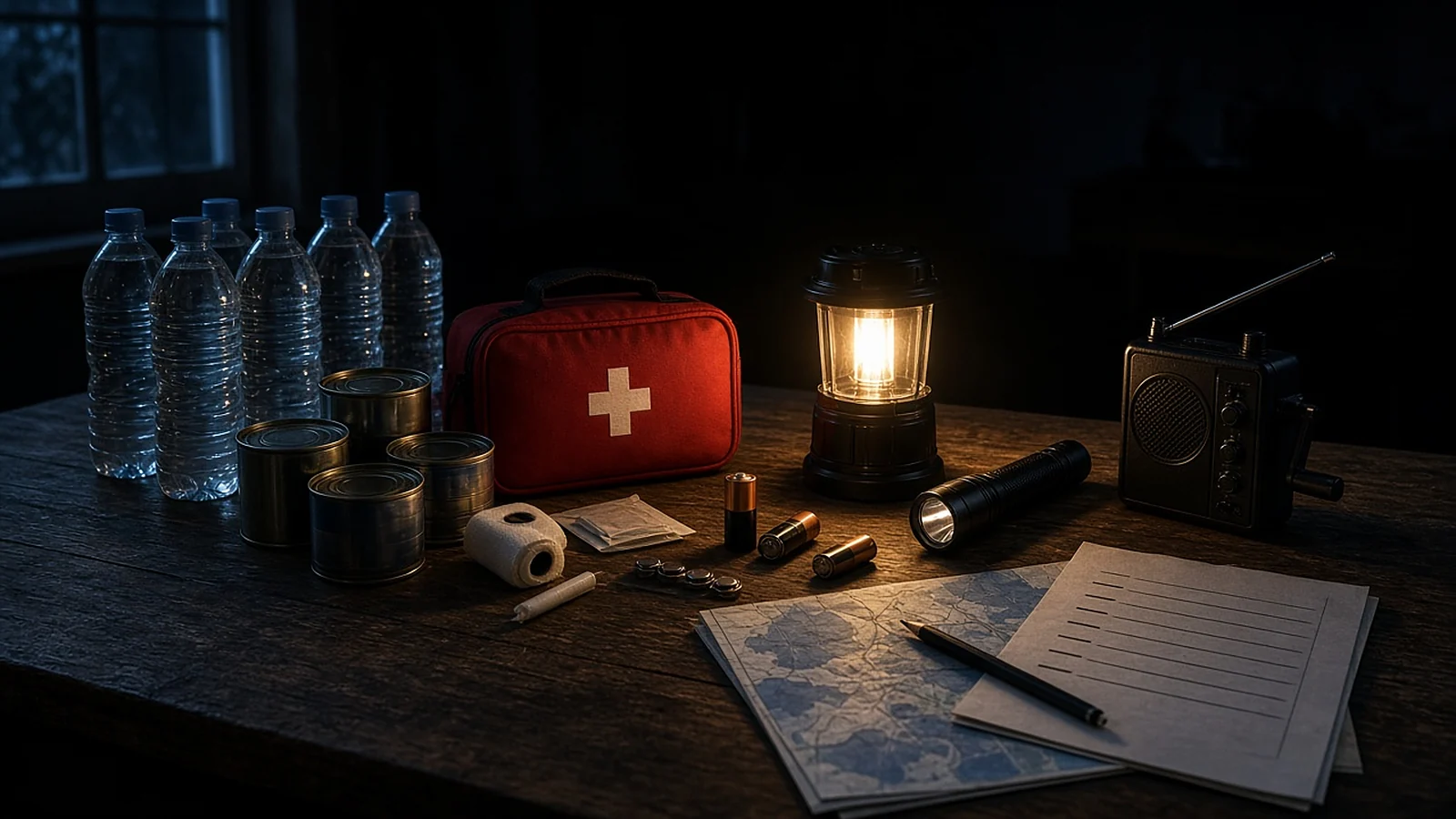
Walk into a warehouse club before a storm and you can feel the mood shift. Carts fill with cases of water, giant bags of rice, and anything that looks like it might help. Some of that buying is wise. Some of it is fear spending that ends up in the back of a closet.
This guide is the calm version. It is a category-by-category list of what to look for if you shop at Costco or another warehouse club, built on the official checklists from Ready.gov, FoodSafety.gov, the USDA, and the American Red Cross.
A quick note on what this article is and is not. It is not sponsored, and it contains no affiliate links. We do not list prices or name specific products, because store inventory and prices change constantly and we will not publish a number we have not checked that day. Instead, we give you the categories that matter and the questions to ask, so you can compare what is on the shelf in front of you.
Buying in bulk can be good stewardship. It can also be waste with a bigger box. The difference is planning.
First, decide what “enough” means for your family
Before you push a cart, set a target. The official sources give clear ranges:
- Ready.gov says you may need to survive on your own for several days after an emergency, and recommends at least a several-day supply of non-perishable food and one gallon of water per person per day for several days.
- FoodSafety.gov says to plan for at least a 3-day supply of food and at least a 3-day supply of water for each person and each pet.
- The American Red Cross recommends food and water for a 3-day supply for evacuation and a 2-week supply for home, plus a 7-day supply of medications.
Write your household’s numbers on your phone before you go: how many people, how many pets, and how many days you are aiming for. Bulk packages make it easy to overshoot in one category and forget another entirely.
Category 1: Water
Water is the first line on every official list. Ready.gov’s standard is one gallon per person per day, for drinking and sanitation. FoodSafety.gov adds that you should consider storing more than this for hot climates, for pregnant women, and for people who are sick.
What to look for and ask:
- Sealed, commercially bottled water is the simplest option to store. FoodSafety.gov says to observe the expiration date for store-bought water and to replace other stored water every 6 months.
- Can you store it well? Cases are heavy. FoodSafety.gov says to store your emergency water where it will be as safe as possible from flooding.
- Plan a little unscented bleach. FoodSafety.gov recommends keeping a bottle of unscented liquid household chlorine bleach to disinfect water and for cleaning, and notes that because active chlorine decreases over time, you should consider replacing the bottle each year.
Our guide on how much water to store for an emergency covers containers, rotation, and how to make water safe if your supply runs low.
Category 2: Shelf-stable food
This is where bulk shopping can genuinely help a family, as long as you buy what you will rotate and eat. Ready.gov suggests ready-to-eat canned meats, fruits, and vegetables; protein or fruit bars; dry cereal or granola; peanut butter; dried fruit; canned juices; non-perishable pasteurized milk; high-energy foods; food for infants; and comfort foods.
Questions to ask in the aisle:
- Will my family actually eat this? Ready.gov’s first rule is to choose foods your family will eat. A case of something no one likes is not a supply. It is clutter.
- Does it need cooking or water? FoodSafety.gov says to favor foods that need little or no cooking, water, or refrigeration. Rice and dry pasta keep well, but they depend on water and heat, so balance them with no-cook items.
- How salty is it? FoodSafety.gov advises against very salty or spicy foods because they increase the need for drinking water.
- How long will it keep? The USDA’s shelf-stable chart lists 2 to 5 years for low-acid canned goods like canned meat, poultry, soups, beans, and vegetables; 12 to 18 months for high-acid canned goods like juices, tomatoes, and fruit; 2 years for rice and dried pasta; and 12 months for commercially packaged jerky.
- Can I use it up before it goes stale? A very large package is only a bargain if your household finishes it in time. Split bulk packs into smaller airtight containers if you open them.
FoodSafety.gov also notes that it is not necessary to buy dehydrated or other types of emergency food. Ordinary shelf-stable groceries, chosen well and rotated, are enough for most families. For a complete pantry plan, see our emergency food supply list.
Don’t forget the can opener
A manual can opener appears on the Ready.gov checklist. A pantry full of cans with no way to open them is a hard lesson to learn in the dark.
Category 3: Light, power, and communication
Ready.gov’s basic kit includes a flashlight, extra batteries, a battery-powered or hand-crank radio and a NOAA Weather Radio with tone alert, and a cell phone with chargers and a backup battery.
When you compare options in a warehouse store, ask:
- Do the batteries fit what we own? Count the flashlights, radios, smoke and carbon monoxide alarms, and medical devices in your home, and note the battery sizes before you shop.
- Is there a light for every person? Ready.gov’s power outage guidance says to have flashlights for every household member.
- Can we charge phones without the wall? Ready.gov mentions portable chargers and power banks as alternatives during outages.
Choose flashlights over candles where you can. During outages, the U.S. Consumer Product Safety Commission advises using flashlights or battery-operated candles instead of real candles because of fire risk.
Category 4: First aid and medicine
The Ready.gov and Red Cross kit lists both include a first aid kit. The Red Cross also recommends a 7-day supply of medications and medical items, and Ready.gov lists non-prescription medicines such as pain relievers, anti-diarrhea medication, antacids, and laxatives.
Things to think through:
- Does a pre-built kit cover what your family needs? Compare its contents to a trusted list. Our family first aid kit checklist walks through the Red Cross list item by item.
- Will you use the bulk quantity before it expires? Medicines carry expiration dates. Buy amounts you can rotate.
- Prescription medicines are a conversation, not a purchase. Ready.gov notes that an emergency can make it hard to refill a prescription or find an open pharmacy. Ask your doctor or pharmacist how to keep a safe extra supply.
Category 5: Sanitation and hygiene
This is the category people forget until they need it. Ready.gov’s lists include moist towelettes, garbage bags, and plastic ties for personal sanitation; soap, hand sanitizer, and disinfecting wipes; feminine supplies and personal hygiene items; and paper cups, plates, paper towels, and plastic utensils.
Warehouse sizes can make a lot of sense here, because these items do not spoil quickly and you use them every day anyway. Toilet paper, trash bags, paper plates, and wipes are good examples of “buy it, use it, replace it” supplies.
Category 6: Babies, elders, and pets
Ready.gov’s additional supplies include infant formula, bottles, diapers, wipes, and diaper rash cream, along with pet food and extra water for your pet. FoodSafety.gov reminds you to store water for each pet as well as each person.
If you buy formula or baby food in bulk, check the dates closely. The USDA notes that infant formula and some baby food are the exception to the general rule that product dates are mainly about quality.
How to compare bulk options without the hype
You do not need a deal-hunter’s spreadsheet. A few honest questions keep you grounded:
1. Cost per use, not cost per box. Compare unit prices on the shelf tags. A bigger box is only cheaper if you use all of it.
2. Shelf life versus your rotation speed. Match the package size to how fast your household eats it.
3. Storage space you actually have. Know where every case will go before you put it in the cart.
4. Fit with your list. If an item is not on your plan, it can wait.
5. Read the label, not the marketing. Words like “survival” or “emergency” on a package do not tell you anything the ingredient list and dates do not.
Storing a bulk haul safely
Bringing it home is the easy part. Keeping it good takes a little care. FoodSafety.gov and the USDA agree on the basics:
- Store food in a cool, dry, dark place, ideally 40°F to 70°F. The USDA says canned goods do best below 85°F.
- Keep food away from stoves, refrigerator exhausts, gasoline, paints, and solvents.
- Do not store cans under the sink or in a damp garage or basement.
- Protect boxed food in tightly closed plastic or metal containers, as Ready.gov advises.
- Keep supplies on shelves out of the way of floodwater.
- Write the purchase month on each item and use the oldest first.
Frequently asked questions
Is it cheaper to build an emergency supply at a warehouse club?
It depends on what you buy and whether you use it before it expires. Compare unit prices on the shelf tags, and buy bulk only for items your family eats or uses regularly. We do not publish prices because they change.
Should I buy pre-packaged emergency food kits?
FoodSafety.gov says it is not necessary to buy dehydrated or other types of emergency food. Many families do well with regular shelf-stable groceries that they rotate.
How much water should I buy?
Ready.gov recommends one gallon per person per day. The Red Cross suggests a 2-week supply for home. Start with three days and build up.
Is this article sponsored by Costco?
No. It is not sponsored by Costco or any other retailer, and it contains no affiliate links.
Your one faithful step this week
Before your next warehouse trip, sit down for ten minutes and write three numbers: how many people and pets you care for, how many days you are aiming for, and how many gallons of water that means. Then pick just one category from this list to fill on that trip. Steady beats frantic.
“For which of you, intending to build a tower, sitteth not down first, and counteth the cost, whether he have sufficient to finish it?”
Luke 14:28 (KJV)
Sources
- Ready.gov: Build a Kit
- Ready.gov: Food
- Ready.gov: Power Outages
- FoodSafety.gov: Food Safety in a Disaster or Emergency
- USDA FSIS: Shelf-Stable Food Safety
- American Red Cross: Survival Kit Supplies
- CPSC: Winter Weather Safety Tips to Prevent Fires and Carbon Monoxide Poisoning
Related reading
- How Much Water to Store for an Emergency
- Family First Aid Kit Checklist
- Building a 2-Week Emergency Food Supply
General educational content, not individualized medical, safety, engineering, or financial advice. Follow your local officials and qualified professionals. In an emergency, call 911 (U.S.). See our Disclaimer.
Get one faithful step every week
The Shepherd’s Letter: Scripture, a short teaching, and one practical step for your household. Free.
Leave a Reply