
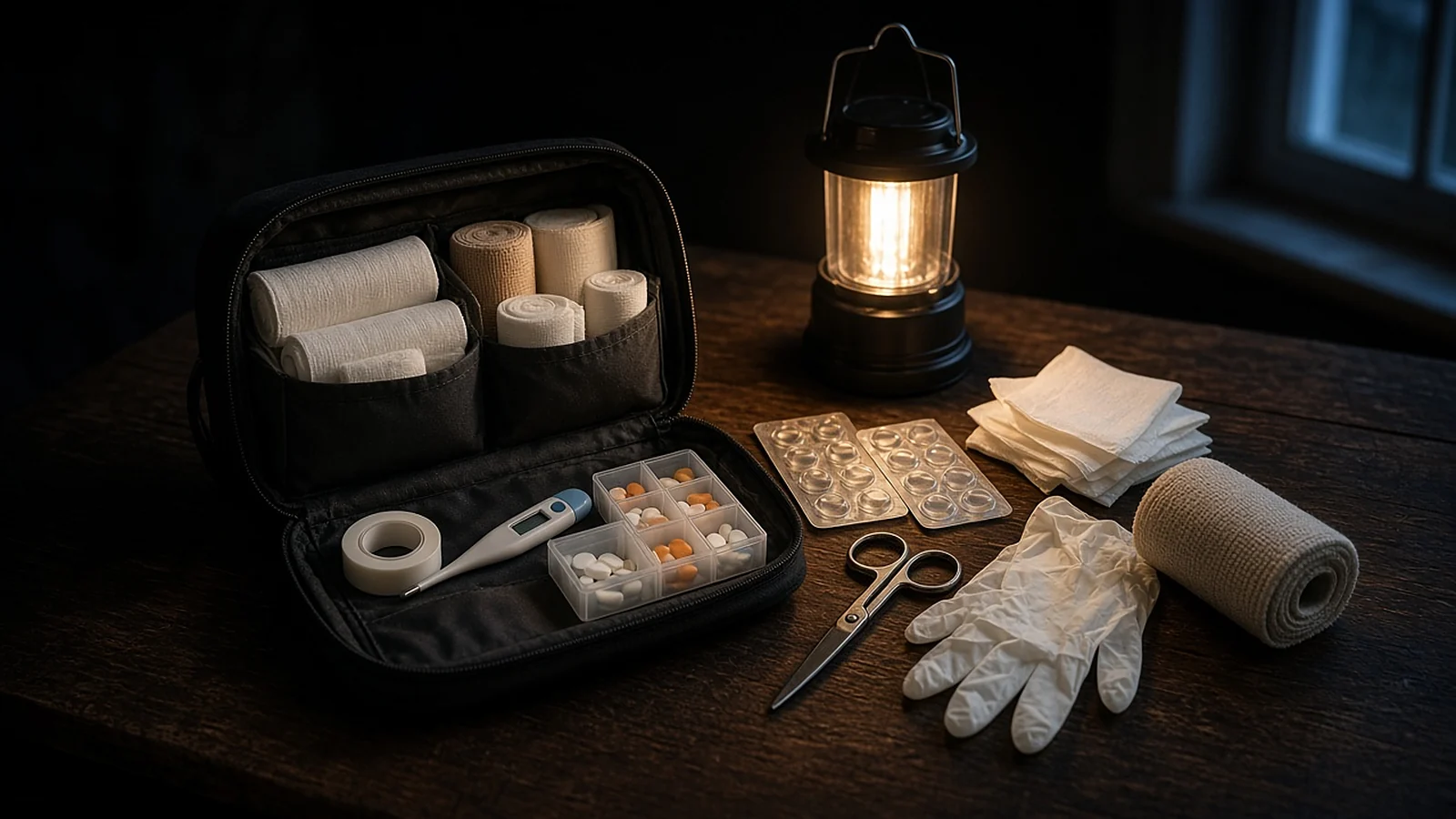
Scraped knees, kitchen cuts, a fever in the middle of the night. Most of the time, a first aid kit is about everyday care. In an emergency, when help may take longer to arrive, it matters even more. A well-stocked kit, and knowing where it is, lets you respond with calm hands instead of a frantic search.
This guide walks through the American Red Cross first aid kit list for a family of four, explains what the items are generally used for, and shows you how to keep your kit ready.
Important: this article is general information, not medical advice. A first aid kit does not replace training or professional care. If you think someone is having a medical emergency, call 911 (U.S.) right away.
Where to keep first aid kits
The Red Cross recommends three simple habits:
- Keep a first aid kit in your home and in your car.
- Carry a first aid kit with you or know where you can find one.
- Find out where the first aid kits are where you work.
At home, store the kit somewhere every adult and older child can reach quickly, and make sure everyone knows where it is. A kit hidden in the back of one person’s closet does not help when that person is not home.
Buy one or build one?
The Red Cross notes that first aid kits come in many shapes and sizes. You can buy one at a drug store or make your own. Some kits are designed for specific activities such as hiking, camping, or boating. Either way, the Red Cross says to make sure your kit has everything you may need, including personal items such as medications and emergency phone numbers, and any other items your health-care provider suggests.
Building your own can be a good family project and lets you choose quality supplies. Buying a ready-made kit is faster. Many families do both: buy a basic kit, then add to it.
The Red Cross first aid kit list for a family of four
The Red Cross recommends that all first aid kits for a family of four include:
- 2 absorbent compress dressings (5 x 9 inches)
- 25 adhesive bandages (assorted sizes)
- 1 adhesive cloth tape (10 yards x 1 inch)
- 5 antibiotic ointment packets (approximately 1 gram)
- 5 antiseptic wipe packets
- 2 packets of aspirin (81 mg each)
- 1 emergency blanket
- 1 breathing barrier (with one-way valve)
- 1 instant cold compress
- 2 pairs of nonlatex gloves (size: large)
- 2 hydrocortisone ointment packets (approximately 1 gram each)
- 1 gauze roll (roller) bandage, 3 inches wide
- 1 roller bandage, 4 inches wide
- 5 sterile gauze pads, 3 x 3 inches
- 5 sterile gauze pads, 4 x 4 inches
- Oral thermometer (non-mercury/nonglass)
- 2 triangular bandages
- Tweezers
- Emergency first aid instructions
Print this list and tape it inside the lid of your kit. It becomes your restocking checklist.
What the items are generally for
Understanding the purpose of each item helps you use it and remember to replace it. In general terms:
Covering and protecting wounds
Adhesive bandages handle small cuts and scrapes. Sterile gauze pads and absorbent compress dressings cover larger wounds, and roller bandages and adhesive cloth tape hold dressings in place. Triangular bandages are versatile and are often used as slings.
Cleaning and caring for skin
Antiseptic wipes help clean the skin around a wound and your hands. Antibiotic ointment and hydrocortisone ointment are common topical products. Follow the package directions and ask a pharmacist or doctor if you are unsure whether one is right for a particular person.
Protecting the helper
Nonlatex gloves protect both you and the person you are helping. The breathing barrier with a one-way valve is used during rescue breathing. Training is what makes these items useful, which is one reason a first aid and CPR class is worth your time.
Comfort, cold, and checking
The instant cold compress is commonly used for bumps and minor swelling. The emergency blanket helps keep a person warm. The oral thermometer checks for fever, and tweezers remove splinters. Aspirin is on the Red Cross list; aspirin is not appropriate for everyone, including children and teens, so talk to your doctor or pharmacist about which medicines belong in your household’s kit.
Instructions
The Red Cross includes emergency first aid instructions for a reason. In a stressful moment, even people who know what to do benefit from a clear guide.
Make it personal
The basic list covers common needs. Your family’s kit should also reflect your household:
- Medications that family members take regularly, with a written list of names and doses.
- Emergency phone numbers, including your doctor, pharmacy, and poison control.
- Allergy information and any medical conditions a helper should know about.
- Items your health-care provider suggests, such as supplies for diabetes, asthma, or other conditions.
- Children’s needs, such as child-appropriate medicines recommended by your pediatrician.
Keep sensitive health details private and secure. A simple card with the essentials, kept in the kit, is often enough.
Keep it ready: check it regularly
The Red Cross recommends that you check the kit regularly, and check expiration dates and replace any used or out-of-date contents.
A simple rhythm helps:
1. After every use, write down what you used and replace it on your next shopping trip.
2. Twice a year, open the kit and check every item against the list. Replace expired ointments, medicines, and anything damaged.
3. Once a year, review your family’s needs. New baby? New medication? Update the kit.
Pair your check with something you already do, such as changing smoke detector batteries or starting a new school year.
Kits for the car and on the go
The Red Cross recommends keeping a first aid kit in your car as well as your home. A car kit can be smaller, but it should still cover the basics: bandages, gauze, tape, gloves, antiseptic wipes, an emergency blanket, and a card with emergency contacts and any important medical information for the people who ride with you most.
Heat and cold inside a vehicle can be hard on some supplies, so check the car kit on the same schedule as your home kit and replace anything that looks damaged. If your family travels, hikes, or spends time outdoors, the Red Cross notes that some kits are designed for specific activities such as hiking, camping, or boating. Choose one that fits how your family actually lives.
Finally, think about the people you care for beyond your own home. An elderly parent, a neighbor who lives alone, or your church nursery may also benefit from a simple, well-stocked kit. Preparing for others is one of the quiet ways a household serves.
Your first aid kit is part of a bigger plan
A first aid kit belongs inside your household’s larger emergency preparations. Ready.gov’s Build a Kit list includes a first aid kit alongside water, food, light, and communication, and the Red Cross survival kit list adds a 7-day supply of medications and medical items. See our Emergency Kit Checklist to put it all together.
Learn the skills
Supplies are only as useful as the hands that use them. A first aid and CPR course from a recognized provider builds the confidence to act. Consider taking one together as a family or with your church small group. Caring for one another well sometimes means learning how.
Common mistakes to avoid
- Using it and forgetting to restock. The bandage box empties one scrape at a time. Keep a running list taped inside the lid.
- Only one kit. The Red Cross recommends a kit in your home and in your car. A small kit in a backpack or diaper bag helps too.
- No personal information. A kit without your family’s medication list and emergency numbers leaves a helper guessing.
- Expired contents. Ointments, medicines, and some supplies expire. The Red Cross recommends checking expiration dates and replacing out-of-date contents.
- Supplies without skills. The most useful thing in any kit is a person who knows what to do. Training turns supplies into care.
Frequently asked questions
How many first aid kits should a family have?
The Red Cross recommends keeping one in your home and one in your car, carrying one with you or knowing where to find one, and knowing where kits are at work.
Is a store-bought kit good enough?
It can be a solid start. The Red Cross says to make sure any kit, bought or homemade, has everything you may need, including personal medications, emergency phone numbers, and items your health-care provider suggests. Compare it to the list above and fill the gaps.
How often should I check my first aid kit?
The Red Cross says to check the kit regularly and replace any used or out-of-date contents. Twice a year is an easy rhythm to remember.
Your one faithful step this week
Find your first aid kit, open it, and check it against the Red Cross list above. Write down what is missing or expired, and replace those items this week. Then show everyone in your home where the kit lives.
Sources
- American Red Cross: Make a First Aid Kit
- American Red Cross: Survival Kit Supplies
- Ready.gov: Build a Kit
Related reading
General educational content, not individualized medical, safety, engineering, or financial advice. Follow your local officials and qualified professionals. In an emergency, call 911 (U.S.). See our Disclaimer.
Get one faithful step every week
The Shepherd’s Letter: Scripture, a short teaching, and one practical step for your household. Free.
Leave a Reply