
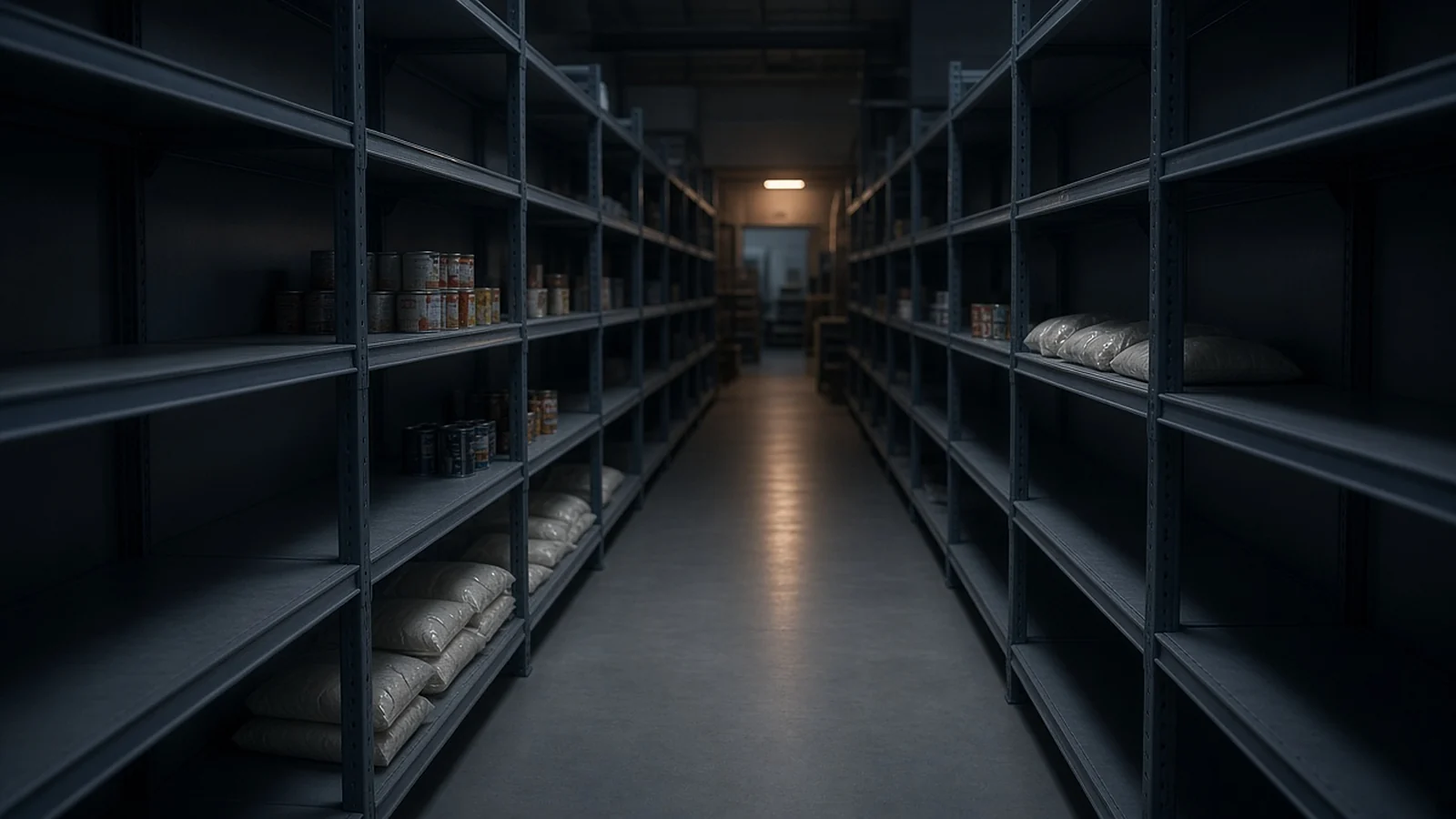
Most of us never think about the pantry until the roads are closed, the store shelves are thin, or the power has been out since last night. Then the question becomes very simple: what can my family actually eat for the next several days?
An emergency food supply answers that question ahead of time. It does not need to be a basement full of buckets or an expensive kit from a catalog. For most households it is simply a few weeks of the food you already eat, chosen so it keeps on the shelf, needs little or no cooking, and is rotated so nothing goes to waste.
This guide pulls together the guidance from Ready.gov’s Food page, FoodSafety.gov, the USDA Food Safety and Inspection Service (FSIS), and the American Red Cross. We will walk through how much to store, what to buy, how to keep it fresh, and how to feed people when the stove will not turn on.
We store food the same way we pray before a trip: not from fear, but from love for the people at our table.
How much food should you store?
The official sources give a range, and it helps to see them side by side:
- FoodSafety.gov says a disaster can disrupt the food supply, so plan to have at least a 3-day supply of food on hand.
- Ready.gov recommends storing at least a several-day supply of non-perishable food.
- The American Red Cross is the most specific: non-perishable, easy-to-prepare food, with a 3-day supply for evacuation and a 2-week supply for home.
That is why this guide aims for two weeks. Three days is the starting line, and many families are wise to stop there for a season while the budget catches up. Two weeks at home is the longer goal the Red Cross sets, and it covers the kind of extended outage or closed-road week that turns a small inconvenience into a real strain.
Food is only half of the pantry. You also need water to drink, to mix with dry foods, and to clean. FoodSafety.gov says to store at least 1 gallon of water per person per day and at least a 3-day supply for each person and each pet. Our full guide on how much water to store for an emergency walks through containers, rotation, and making water safe.
What to store: the Ready.gov list
Ready.gov’s advice is refreshingly plain. When you build your supply, choose foods your family will eat, remember any special dietary needs, and stock canned foods, dry mixes, and other staples that do not require refrigeration, cooking, water, or special preparation.
Ready.gov suggests:
- Ready-to-eat canned meats, fruits, and vegetables, plus a manual can opener
- Protein or fruit bars
- Dry cereal or granola
- Peanut butter
- Dried fruit
- Canned juices
- Non-perishable pasteurized milk
- High-energy foods
- Food for infants
- Comfort and stress foods
Ready.gov also notes that you may already have many of these on hand. That is the most encouraging line on the page. Your emergency supply begins in your own cupboard.
What FoodSafety.gov adds
FoodSafety.gov gives a short filter that helps when you are standing in the aisle. Keep foods that:
- Have a long storage life
- Require little or no cooking, water, or refrigeration, in case utilities are disrupted
- Meet the needs of infants or other family members on special diets
- Meet your pets’ needs
- Are not very salty or spicy, because these foods increase the need for drinking water, which may be in short supply
That last point is easy to miss. A shelf full of salty snacks feels like security, but it quietly drains your water supply. Balance salty items with fruit, juice, and lower-sodium options.
FoodSafety.gov also says plainly: it is not necessary to buy dehydrated or other types of emergency food. Ordinary grocery-store food, chosen well and rotated, does the job.
A simple 2-week pantry, by category
Here is a way to organize your list using the kinds of shelf-stable foods named by Ready.gov and the USDA. Quantities depend on your household, so think in meals, not in items. Count how many people you feed, multiply by three meals a day, and then by the number of days you are aiming for.
Proteins
- Canned meat, poultry, and fish (tuna, chicken, salmon)
- Peanut butter or other nut butters (watch for allergies)
- Canned beans and dried beans and peas
- Commercially packaged jerky
Fruits and vegetables
- Canned fruits and vegetables
- Dried fruit
- Canned juices
Grains and starches
- Dry cereal and granola
- Crackers
- Rice and dried pasta (these need water and heat, so pair them with plenty of no-cook options)
Dairy and drinks
- Non-perishable pasteurized milk, such as shelf-stable cartons or powdered milk
- Canned or boxed juices
Energy and comfort
- Protein bars, fruit bars, and high-energy foods
- A few comfort foods your family genuinely enjoys. Ready.gov lists them for a reason. A familiar treat can calm a frightened child, or a tired adult.
Babies, special diets, and pets
- Infant formula and baby food. Ready.gov advises using ready-to-feed formula when possible; if you must mix formula, use bottled water, or boiled water as a last resort.
- Foods for anyone with allergies, diabetes, celiac disease, or other medical diets
- Pet food, and extra water for your pets
How long does shelf-stable food last?
The USDA’s Shelf-Stable Food Safety guide includes a storage chart. A few lines are especially useful for an emergency pantry:
- Low-acid canned goods (canned meat and poultry, stews, soups except tomato, pasta products, potatoes, corn, carrots, spinach, beans, beets, peas, and pumpkin): 2 to 5 years on the shelf.
- High-acid canned goods (juices, tomatoes, grapefruit, pineapple, apples, mixed fruit, peaches, pears, berries, pickles, and sauerkraut): 12 to 18 months.
- Commercially packaged jerky: 12 months.
- Rice and dried pasta: 2 years.
- Tuna and other seafood in retort pouches: 18 months.
- Home-canned foods: 12 months. Before using, the USDA advises boiling high-acid foods for 10 minutes and low-acid foods for 20 minutes.
Once opened, most canned goods should go into the refrigerator and be used within a few days. The USDA also notes that not all canned goods are shelf stable. Some canned ham and seafood are labeled “Keep Refrigerated,” and those do not belong in your pantry.
What about the date on the package? The USDA explains that, except for infant formula and some baby food, product dating is for quality, not safety. A shelf-stable product can be safely used after a “sell-by” date, though quality may decline after a “use-by” date. Infant formula dates are the exception, so follow them closely.
Where and how to store it
Where you keep food matters as much as what you buy. FoodSafety.gov says the ideal place is cool, dry, and dark, with a best temperature range of 40°F to 70°F. The USDA adds that temperatures below 85°F are best for canned goods, and that heat over 100°F harms them.
Practical rules from both agencies:
- Store food away from the stove and refrigerator exhausts. Heat speeds spoilage.
- Keep food away from gasoline, oil, paints, and solvents. Some foods absorb their smell.
- Do not store canned goods under the sink, in a damp garage or basement, or anywhere with temperature extremes, as the USDA warns.
- Protect food from rodents and insects. FoodSafety.gov says boxed and paper-packaged items keep longer if they are heavily wrapped or stored in waterproof, airtight containers. Ready.gov says to store boxed food in tightly closed plastic or metal containers.
- Keep food on shelves safely above the reach of floodwater.
A closet shelf in the middle of the house is often a better pantry than the garage, even if the garage has more room.
Rotation: first in, first out
The best emergency pantry is not a separate stash you forget about. It is the food you eat every week, with a few extra rows behind it. FoodSafety.gov says to check expiration dates on canned foods and dry mixes and to use and replace food before its expiration date. The USDA suggests checking your pantry every few weeks and using canned goods you have had on hand for a while.
A simple “first in, first out” system makes this easy:
1. Write the purchase month on each item with a marker.
2. Put new items in the back and move older items forward.
3. Cook from the front. When you use something, add it to your grocery list.
4. Check the whole supply twice a year. Some families pair it with the clock change.
Rotation also keeps you honest about point one on Ready.gov’s list: choose foods your family will actually eat. If no one has touched the canned beets in a year, swap them for something they will.
Checking cans before you eat
Ready.gov warns not to eat foods from cans that are swollen, dented, or corroded, even if the food looks safe, and not to eat anything that looks or smells abnormal. The USDA is more specific:
- A small dent on an otherwise good can should be safe. Discard deeply dented cans, the kind you can lay a finger into, and any can with a deep dent on a seam.
- Light surface rust you can wipe away is not serious. Discard heavily rusted cans, because they can have tiny holes.
- Never use bulging, leaking, or swollen cans, or any can that spurts liquid when opened. The USDA warns these can be signs of botulism. Do not taste the food. Double-bag it and throw it away where children and animals cannot reach it.
Eating when the power is out
Plan your first meals around the refrigerator, not the pantry. Our guide to food safety after a power outage explains the USDA’s 4-hour rule for the refrigerator and how long a freezer holds. Once perishables are used or discarded, the shelf-stable supply takes over.
Ready.gov notes that commercially canned food may be eaten out of the can without warming. That is one reason no-cook foods should make up a large share of your supply.
If you want something warm, Ready.gov lists alternative heat sources such as candle warmers, chafing dishes, fondue pots, or a fireplace. Charcoal grills and camp stoves are for outdoor use only. Never bring them inside, even into a garage. They produce carbon monoxide, which Ready.gov describes as a colorless, odorless gas that can kill people and pets.
To heat food in its can, Ready.gov says to:
1. Remove the label.
2. Thoroughly wash and disinfect the can, using a diluted solution of one part bleach to 10 parts water.
3. Open the can before heating.
Keep food in covered containers, keep utensils clean, and do not let garbage pile up inside, for both fire and sanitation reasons, as Ready.gov advises. And remember the rule that runs through every official source: when in doubt, throw it out.
Building it without strain
You do not need to buy two weeks of food this Saturday. A steady approach protects your budget and your peace:
- Week by week: add one or two extra pantry items to each regular grocery trip.
- Fill the gaps first: start with a manual can opener, water, and no-cook proteins.
- Plan three days, then grow: reach the 3-day mark first, then build toward the Red Cross’s 2-week home goal.
- Keep it with your kit: the food supply is one part of a whole emergency kit, alongside light, a radio, first aid, and documents. Ready.gov’s Build a Kit list puts food and a manual can opener on the same checklist as water and batteries.
Frequently asked questions
How much food do I need for two weeks?
Count meals. Multiply the number of people by three meals a day and by 14 days, then add snacks. Store foods your family already eats, and plan water alongside it.
Do I need to buy special emergency food or freeze-dried meals?
No. FoodSafety.gov says it is not necessary to buy dehydrated or other types of emergency food. Ordinary shelf-stable groceries work well when they are stored properly and rotated.
Is canned food safe after the date on the can?
The USDA says dating on shelf-stable food is mainly about quality, not safety, except for infant formula and some baby food. Never use bulging, leaking, or deeply dented cans, whatever the date.
Where is the best place to keep an emergency pantry?
Somewhere cool, dry, and dark, ideally between 40°F and 70°F per FoodSafety.gov, away from stoves, chemicals, and floodwater.
Your one faithful step this week
On your next grocery trip, buy one extra of three things your family already eats and that need no cooking: a canned protein, a canned fruit, and a box of cereal or crackers. Write this month on each with a marker and put them on a shelf of their own. That is the first row of your two-week pantry.
“Go to the ant, thou sluggard; consider her ways, and be wise: Which having no guide, overseer, or ruler, Provideth her meat in the summer, and gathereth her food in the harvest.”
Proverbs 6:6-8 (KJV)
Sources
- Ready.gov: Food
- Ready.gov: Build a Kit
- FoodSafety.gov: Food Safety in a Disaster or Emergency
- USDA FSIS: Shelf-Stable Food Safety
- American Red Cross: Survival Kit Supplies
Related reading
- How Much Water to Store for an Emergency
- Is Food Safe After a Power Outage?
- Emergency Kit Checklist for Families
General educational content, not individualized medical, safety, engineering, or financial advice. Follow your local officials and qualified professionals. In an emergency, call 911 (U.S.). See our Disclaimer.
Get one faithful step every week
The Shepherd’s Letter: Scripture, a short teaching, and one practical step for your household. Free.
Leave a Reply