
As of October 29, 2026.
When the people responsible for defending the country decide that their own bases must be able to keep the lights on without the public power grid, it is worth paying attention. That is what happened at the end of September. This article covers what was actually ordered, what has only been reported, and what a careful household can learn from it, without panic.
What Secretary Hegseth directed
On September 30, 2026, Secretary of War Pete Hegseth delivered a “State of the Force” address at Marine Corps Base Quantico, Virginia, and announced six new initiatives, according to Pentagon News, as published by the U.S. Army. One of them is a program called FORTRESS America. The name stands for Federal Operations for Resilience, Troop Resources, Energy, Supply and Survivability.
The same day, Hegseth signed a memorandum establishing FORTRESS America as a Department of War program. It was addressed to senior Pentagon leadership, the commanders of the combatant commands, and defense agency and field activity directors. The memo describes the program as “the nation’s insurance policy” and organizes it around five pillars:
1. Energy independence
2. Supply-chain and defense-industrial base resilience
3. A strategic defense reserve
4. Installation hardening and cyber resilience
5. Resilience in space and spectrum
The memo says the goal is a homeland that cannot be “starved out, shut down, or cut off.” It directs the Under Secretary of War for Acquisition and Sustainment to stand up a FORTRESS America Program Office within 30 days.
In his speech, as reported by DefenseScoop, Hegseth explained the energy pillar plainly:
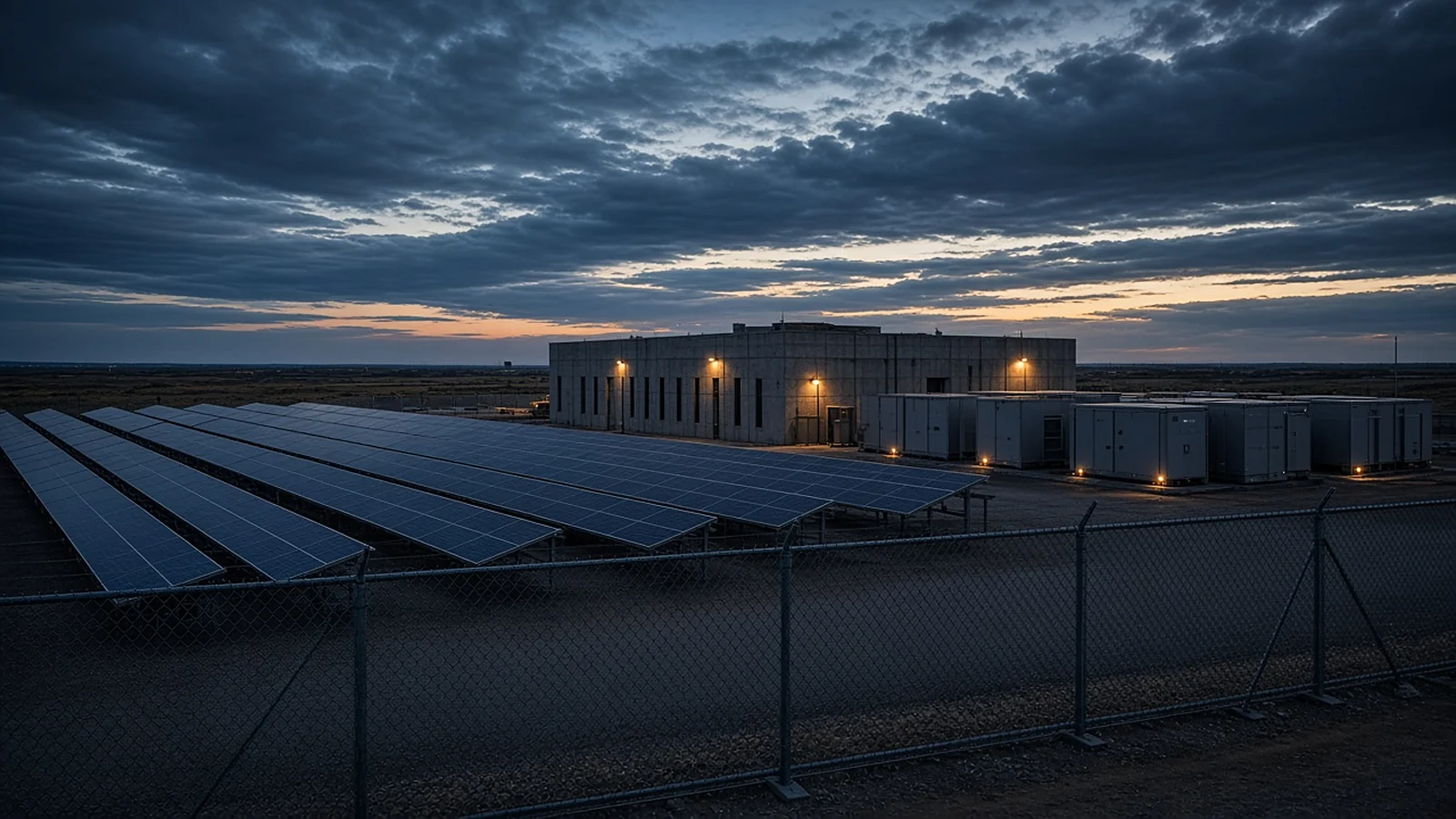
“Every major military installation in America is going to generate its own power, independent of the civilian grid. If an adversary takes down the grid — by cyberattack, by sabotage, or by any means — our bases stay lit. Our aircraft keep flying. Our command centers never go dark.”
What has happened since
- October 6: Under Secretary Michael Duffey issued an implementation memo naming an interim director for the program office, DefenseScoop reported.
- October 20: A senior defense official told reporters the Pentagon is moving first on energy, including microgrids and battery backup, and is assessing the needs of around 500 bases in the continental U.S., Air & Space Forces Magazine reported. The official said the cost is still being assessed. The magazine noted that Hegseth did not say how long the goal will take, and that fully reaching it “could take decades.”
What has not been confirmed
Fox News Digital reported on Oct. 25, 2026, and other outlets repeated, that major bases will be expected to sustain essential operations, including power, water, fuel and communications, for at least 90 days without outside support, citing documents Fox reviewed. We have not seen that 90-day figure in a publicly released Pentagon document, so treat it as reported, not confirmed. Snopes, which asked the Pentagon to confirm the figure, listed it as undetermined.
It is also important to be clear about what FORTRESS America is not. It is a long-term infrastructure and readiness program for military installations. It is not an order for civilians, it is not a warning of a specific attack, and the Pentagon has not said a grid failure is expected. It does reflect something officials have discussed openly for years. Air & Space Forces Magazine notes that many bases depend on the civilian grid for electricity and water, and that in 2024 U.S. intelligence agencies warned of hackers positioning themselves inside critical infrastructure networks such as water and electrical systems.
What this means for your household
You cannot build a microgrid in the backyard, and you don’t need to. But the logic behind FORTRESS America applies to a family as well as a base: know what you depend on, and have a plan for when it stops.
Outages can come from storms, heat, equipment failure or deliberate attacks. Ready.gov notes that an extended outage can disrupt communications, water, and transportation, close stores, gas stations, ATMs and banks, spoil food, and prevent the use of medical devices. Whatever the cause, the preparation is the same.
1. Take your own “installation assessment”
The Pentagon is starting by assessing each base’s power needs. Do the same at home. Walk through a normal day and list everything that needs electricity: the refrigerator, phone chargers, medical devices, a well pump, the garage door. Our Power Outage Checklist walks you through it.
2. Secure your water
Many homes lose water pressure or safe water when the power fails, especially homes on a well. Store at least one gallon per person per day, as Ready.gov recommends. Start with three days and build from there. See How Much Water to Store for an Emergency.
3. Keep a “household reserve” of food
The Pentagon’s plan includes a strategic reserve. Yours can be a shelf of shelf-stable food your family actually eats, plus a plan for the refrigerator. Read our Emergency Food Supply List and Is Food Safe After a Power Outage?
4. Plan safe backup power
Power banks, flashlights and a battery or hand-crank radio cover most families. If you own a generator, use it only outdoors, far from windows and doors, and install battery-backed carbon monoxide alarms. Our Generator Safety guide explains the rules.
5. Harden your “cyber perimeter”
FORTRESS America treats cyber resilience as a core pillar. A household version is simple: turn on two-step verification for your email and bank, use different passwords for different accounts, and agree on a family code word for any urgent phone call asking for money. The FBI has warned that scammers now use artificial intelligence to appear as officials on video calls, and that real law enforcement will never call or text to demand payment.
6. Put it in one kit
Gather it all with our Emergency Kit Checklist and keep a little cash on hand. Our emergency fund guide can help you think through the amount.
Strength that starts at home
There is a phrase in the Hegseth memo worth sitting with: “insurance policy.” Insurance is not fear. It is wisdom applied ahead of time. The bases are being built to keep working when something fails. A family can do the same in a modest, faithful way, one shelf and one checklist at a time.
Scripture describes the same kind of household, built on wisdom rather than worry:
“Through wisdom is an house builded; and by understanding it is established: And by knowledge shall the chambers be filled with all precious and pleasant riches.”
Proverbs 24:3-4 (KJV)
Your one faithful step this week
Tonight, flip off one light switch and imagine the whole house that way for three days. Then write down the first three things your family would need, whether that’s water, light or medicine, and check whether you have them. Whatever is missing goes on this week’s list.
No panic. Just wisdom, one step at a time.
Sources
- U.S. Army / Pentagon News: Hegseth delivers ‘State of the Force’ address, outlines series of new initiatives, Oct. 2, 2026
- Department of War memo: Establishment of FORTRESS America as a Department of War Program for the Defense of the American Homeland, Sept. 30, 2026 (PDF)
- DefenseScoop: Pentagon memo outlines plan to operationalize new ‘FORTRESS America’ program office, Oct. 7, 2026
- Air & Space Forces Magazine: Pentagon Starting with Resilient Energy for Sweeping ‘FORTRESS America’ Project, Oct. 20, 2026
- Fox News Digital: Pentagon’s FORTRESS initiative preps US bases for 90-day survival, Oct. 25, 2026
- Snopes: What we know about Pentagon’s FORTRESS initiative to keep military bases running off-grid
- FBI IC3: Scammers Impersonating Law Enforcement and Government Officials in Fraud Schemes
- Ready.gov: Power Outages
- Ready.gov: Build a Kit
Related reading
- Power Outage Checklist
- How Much Water to Store for an Emergency
- Generator Safety: How to Prevent Carbon Monoxide Poisoning
General educational content, not individualized medical, safety, engineering, or financial advice. Follow your local officials and qualified professionals. In an emergency, call 911 (U.S.). See our Disclaimer.
Get one faithful step every week
The Shepherd’s Letter: Scripture, a short teaching, and one practical step for your household. Free.
Leave a Reply